Curriculum
At Eungai Preschool, our curriculum is carefully designed to help children grow into confident, caring, curious learners.
We focus on 4 key areas that support each child’s development during their years with us:
Social & Emotional Learning
Learning how to understand feelings, build friendships, and make good choices is at the heart of everything we do.
- For our youngest children (2.5–3 years): We use songs, stories, finger plays, and puppets to help them learn about their emotions and how to share and play with others.
- For 3–4 year olds: We introduce the PALS program (Playing and Learning to Socialise), which gently guides children in building social skills.
- For 4–5 year olds: Children explore more complex ideas like “What might others be thinking?”, “How big is this problem?”, and “What is the group plan?”.
- For 5–6 year olds: We weave in pre-literacy learning, such as recognising sounds, rhymes, syllables, and the different parts of a book, preparing them for school.
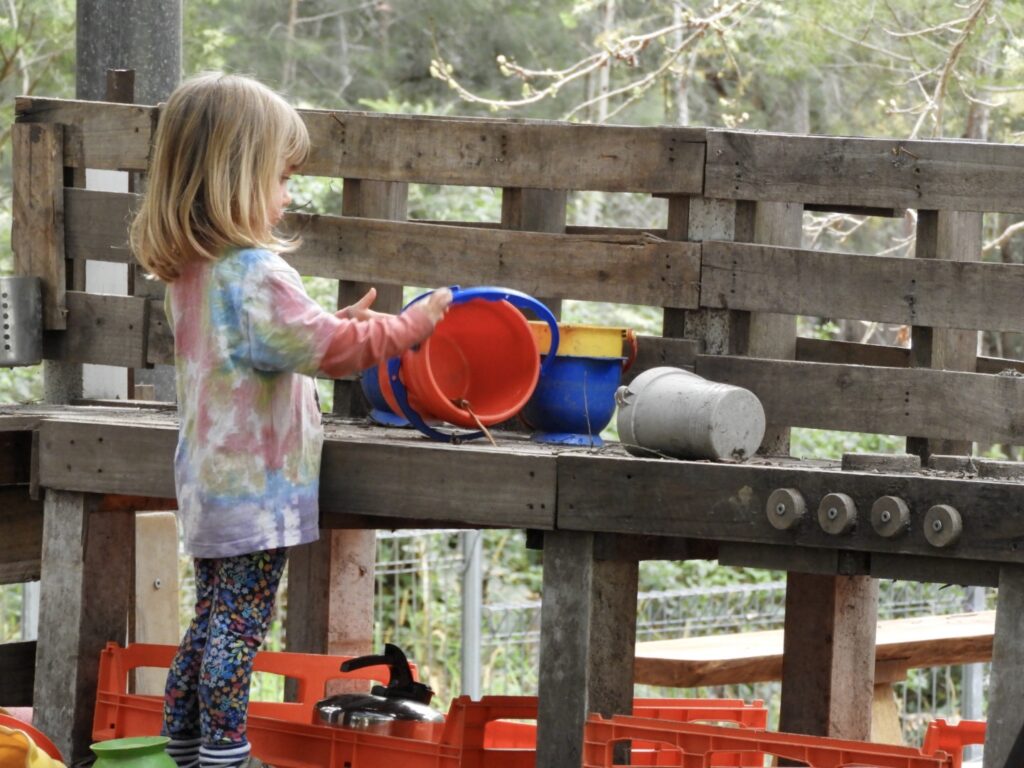
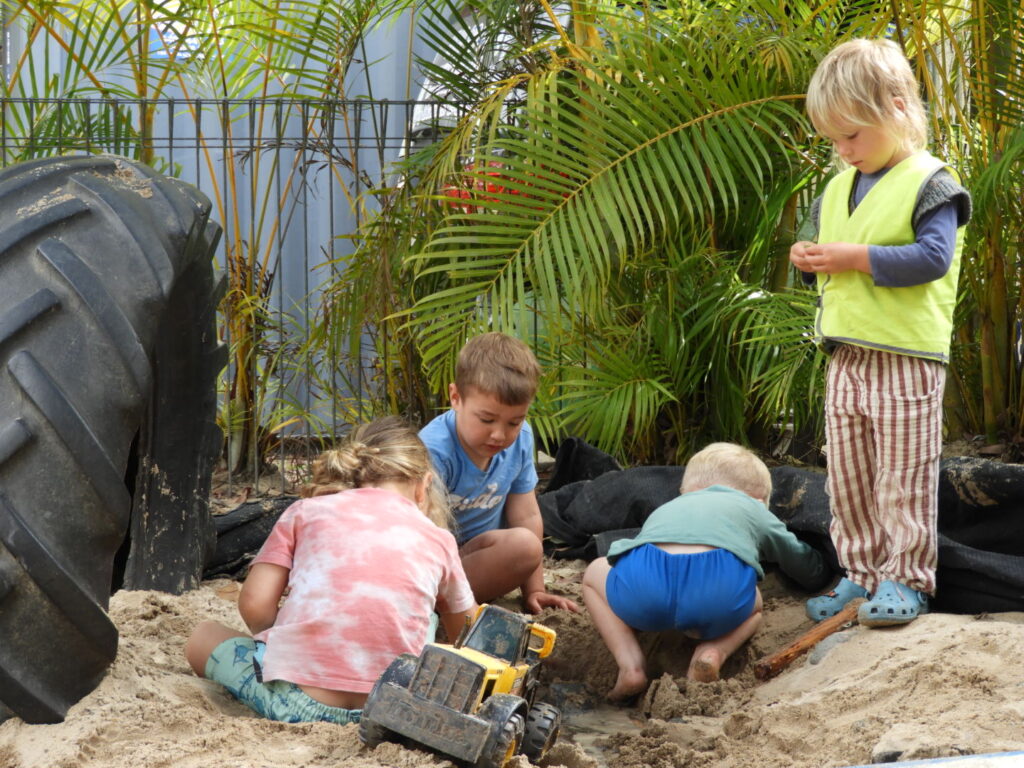
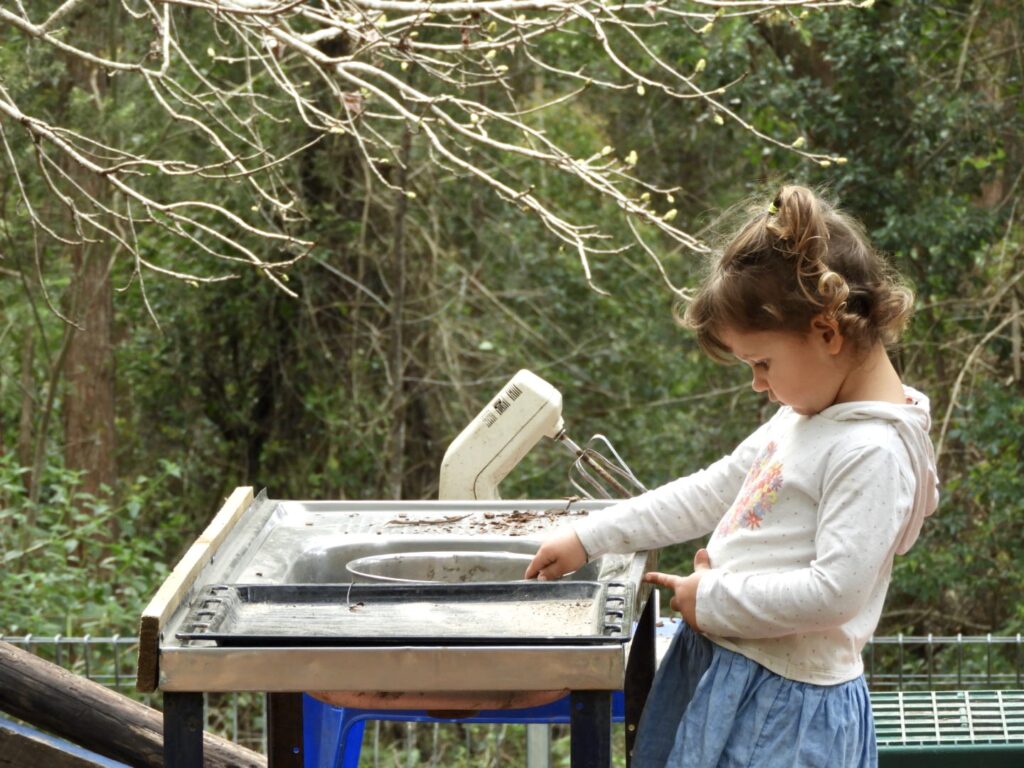
Inspiring Play Spaces
Our indoor and outdoor environments are carefully set up to spark curiosity and imagination. Every space invites children to play, experiment, problem-solve, and take safe risks.
Children are encouraged to take ownership of these spaces – rearranging, redesigning, and exploring them in ways that bring joy, connection, and creativity.
Extending Children’s Thinking
Children are naturally curious, and our teachers love to follow their interests. Whether it’s a fascination with insects, a make-believe adventure, or experimenting with water, we help them explore their play and imaginations further. We call this “holding the thread” of their interest, and then “extending the thread” by adding new materials, books, pictures, and group projects that take their learning deeper.
Learning Through the Arts
Every child has their own unique way of expressing themselves and connecting with the world. That’s why we place a strong focus on the arts – from painting, sewing, clay, and woodwork, to music, storytelling, and exploring light and shadow. With dedicated art spaces indoors and outdoors, children have the time and support to find their own “language of learning” through creative expression.