
Bush Play Program
The Bush Play Program
Eungai Preschool’s Bush Play Program is led by 3 members of the Teaching Team and utilises the adjoining State Forest as an interactive learning environment of story, wonder and exploration.
Participants leave preschool at 9.30am and return by 2.30pm, taking their water and food for the day in backpacks. There are vines to swing on, creeks to step through or jump over, termite mounds to climb and natural worlds and ecosystems to explore.
Children learn Ngambaa stories, bush tucker, music, dance, natural weaving and art. Did you know that bush yams over 50cm can be found under certain tree roots? Can you recognise a bandicoot burrow? We listen to the birdcalls and learn to recognise each, we navigate the delights and horrors of the natural world (leeches!) and as we immerse ourselves in nature’s embrace we feel peace seep into our souls.
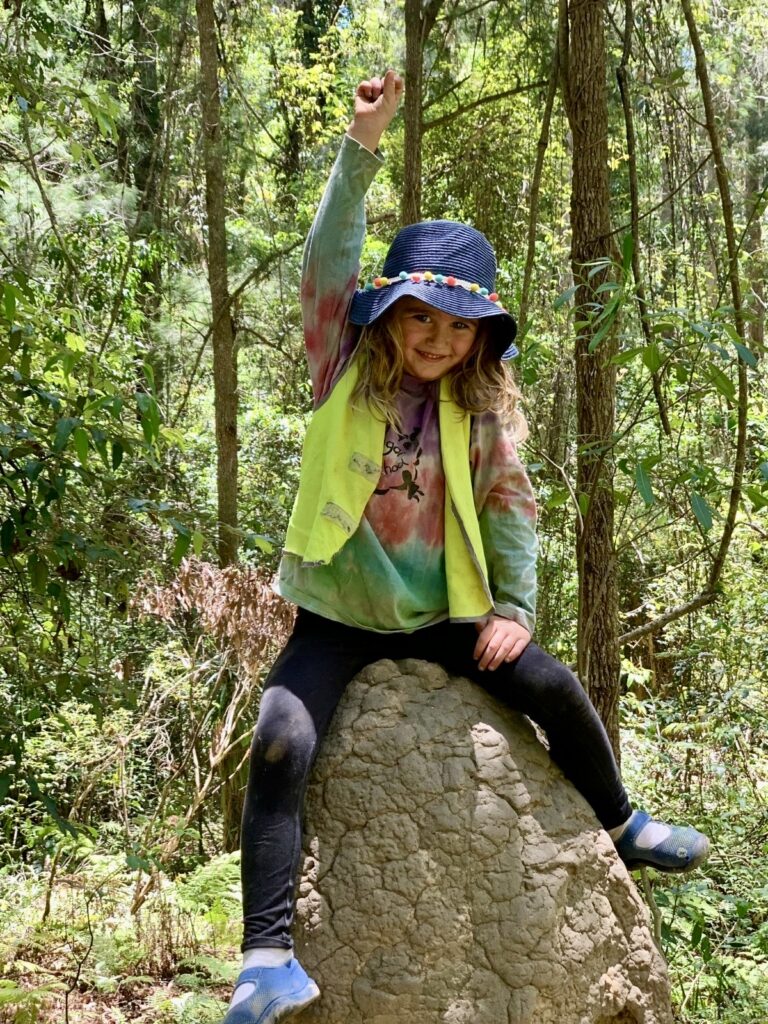
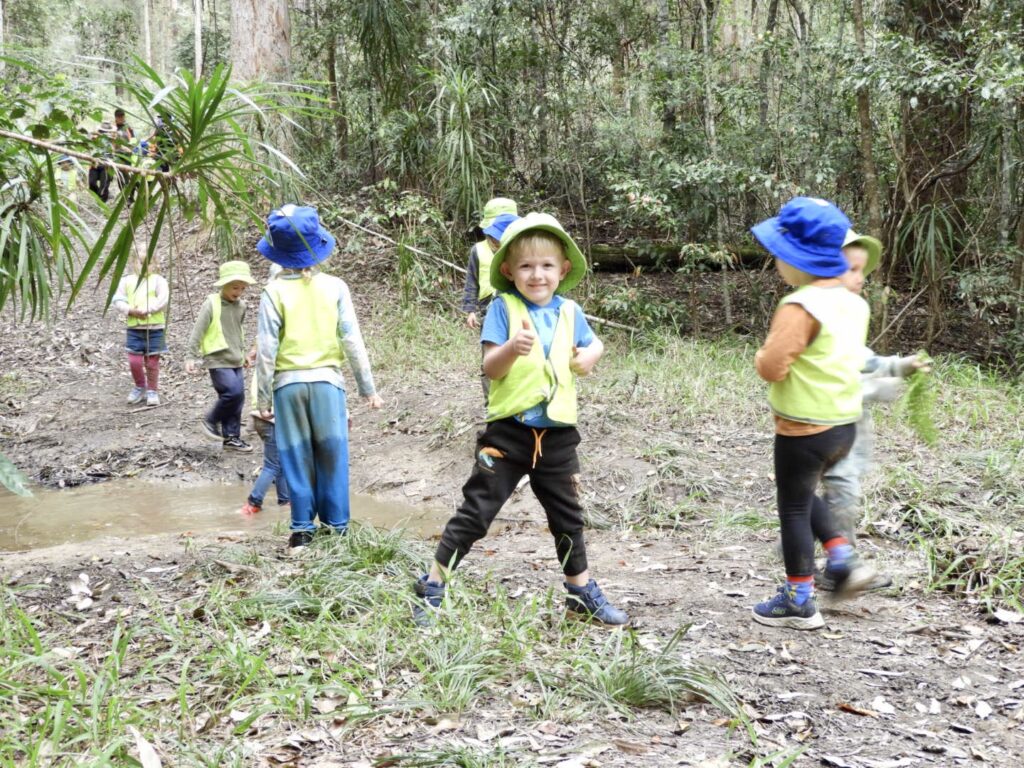
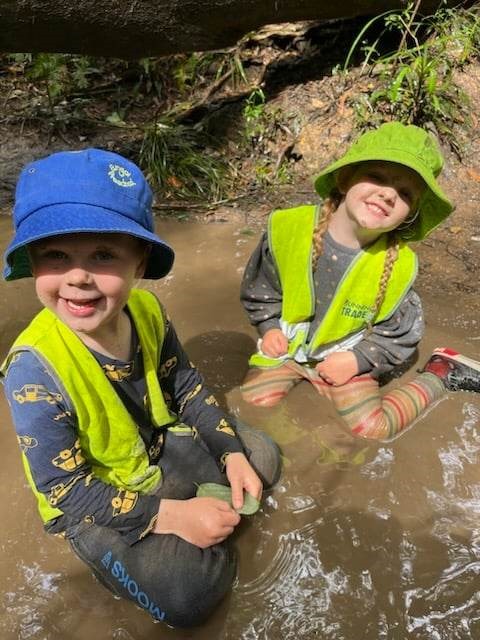
At lunch time we sit around the fire waiting for damper to cook, sharing excited stories, noticing sunlight glinting through treetops, caressing moss on roots.
Appropriate clothing for Bush Play is essential. Long pants or leggings, long sleeved shirt, long sock, hat and closed in shoes are essential.
When we engage in our Bush Play Program, each child is viewed as:
- Equal, unique and valuable
- Competent to explore and discover
- Equipped to experience appropriate risk and challenge
- Able to initiate and drive their own learning and development
- Enabled to experience regular success
- Empowered to develop positive relationships with themselves and other people
- Entitled to develop a strong, positive relationship with the natural world
At Eungai Preschool, children’s connection to the natural world is not an ‘extra’ element of our curriculum – it is a central pillar that shapes identity, wellbeing and learning. Our philosophy recognises nature as both teacher and companion. The bush, seasons, weather, plants, insects, mud and open sky form a learning environment rich in possibility, sensory experience and deep ecological wisdom. In these spaces children develop curiosity, resilience, and a felt understanding of their place within the living world.
Our Bush Program provides children with regular, predictable immersion in nature. It is through repeated experiences – returning to the same logs, creek beds and climbing trees that children form authentic relationships with place. They observe patterns, notice changes, care for living things and cultivate a sense of stewardship. These long term relationships with land foster responsibility and respect far more deeply than any lesson can convey.
Risk-taking in nature also plays an important role. Climbing uneven surfaces, balancing on logs, crossing creeks, or navigating bush trails teaches children to trust their bodies, assess risk, and adapt to changing conditions. These experiences strengthen resilience, confidence, and problem solving skills. Nature challenges are real, meaningful, and deeply motivating – the build competence in ways that indoor environments cannot replicate.
The environment is truly the ‘third teacher’ in our practice. Educators design experiences that honour children’s natural curiosity, while also stepping back to allow the environment itself to speak. We observe, reflect and adapt – following children’s interests, responding to seasonal shifts , and creating invitations that extend emerging enquiries. Nature offers its own provocations, and educators amplify these through thoughtful documentation and dialogue.