Attunement
Attunement to Children’s 100 Languages
We understand communication as a broad, expressive landscape – one that extends far beyond spoken language.
Rooted in the Reggio concept of the 100 Languages of Children and enriched by our own framework, The Arts of Attunement, we recognise that every child expresses thought, emotion, imagination and identity in multiple ways.
Attunement is the lens through which we notice, honour, and respond to these languages. It transforms communication from a transactional exchange into a relational act of deep listening, connection and meaning making.
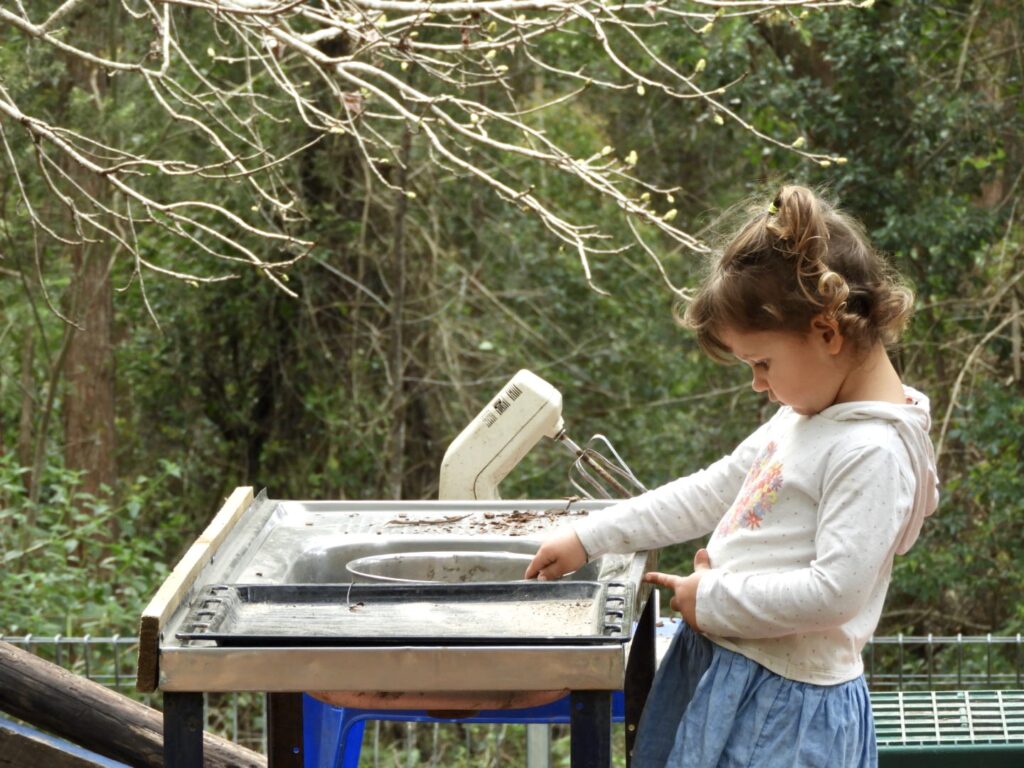
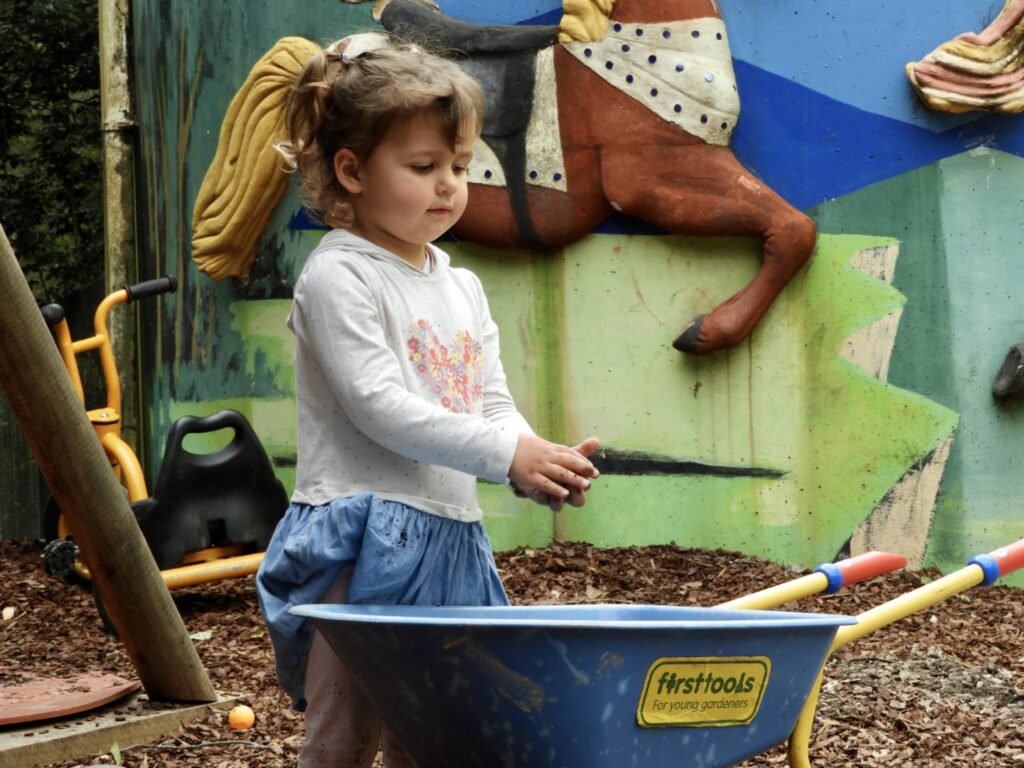
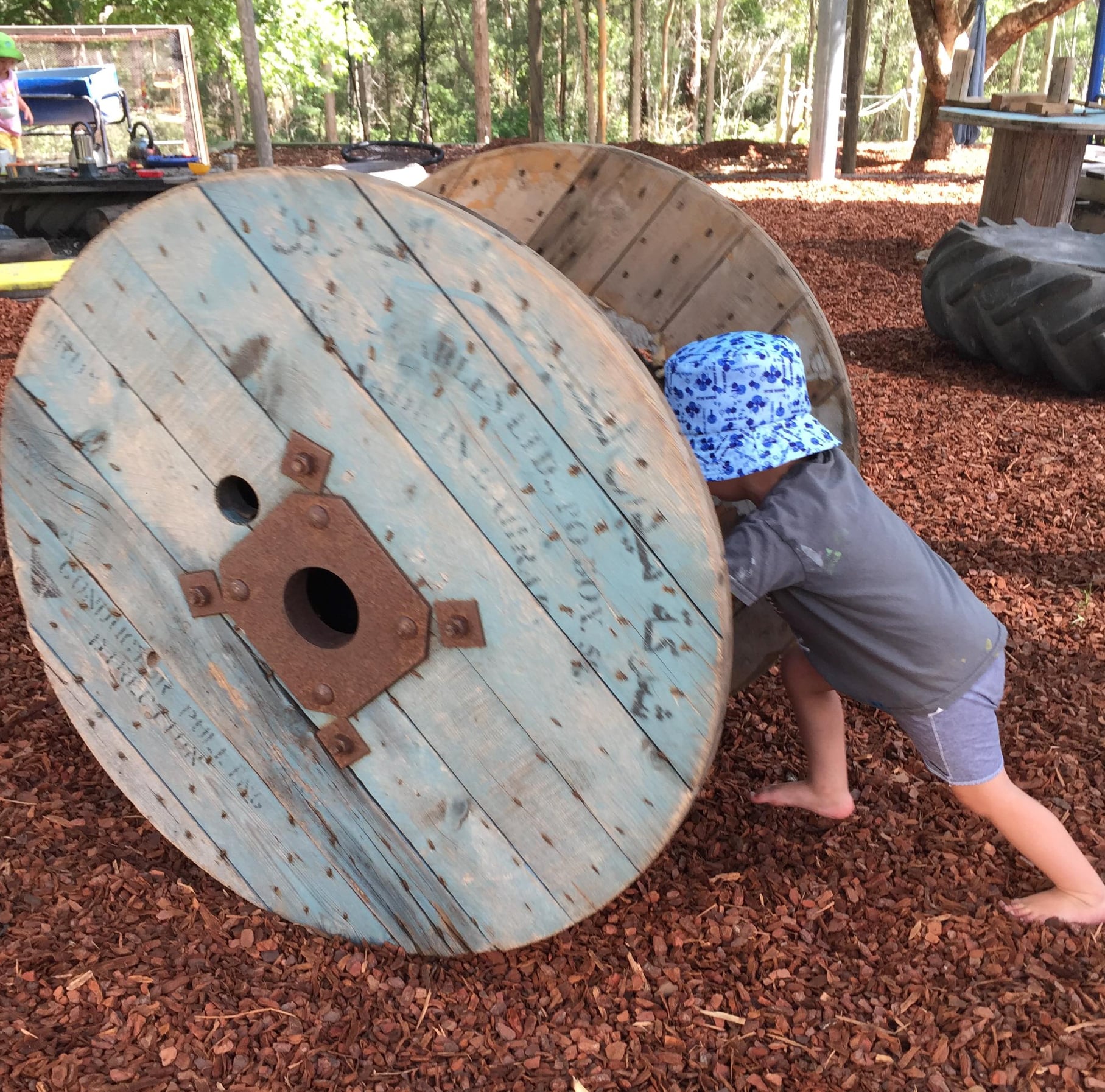
The 100 Languages remind us that children communicate through movement, gesture, drawing, construction, storytelling, dramatic play, pattern making, music, inquiry, silence and sensory exploration.
The Arts of Attunement is the educator’s parallel commitment – our practice of tuning in, slowing down, watching with curiosity, responding sensitively and interpreting each child’s unique expressive rhythms. These concepts together create a powerful communicative ecosystem at Eungai.
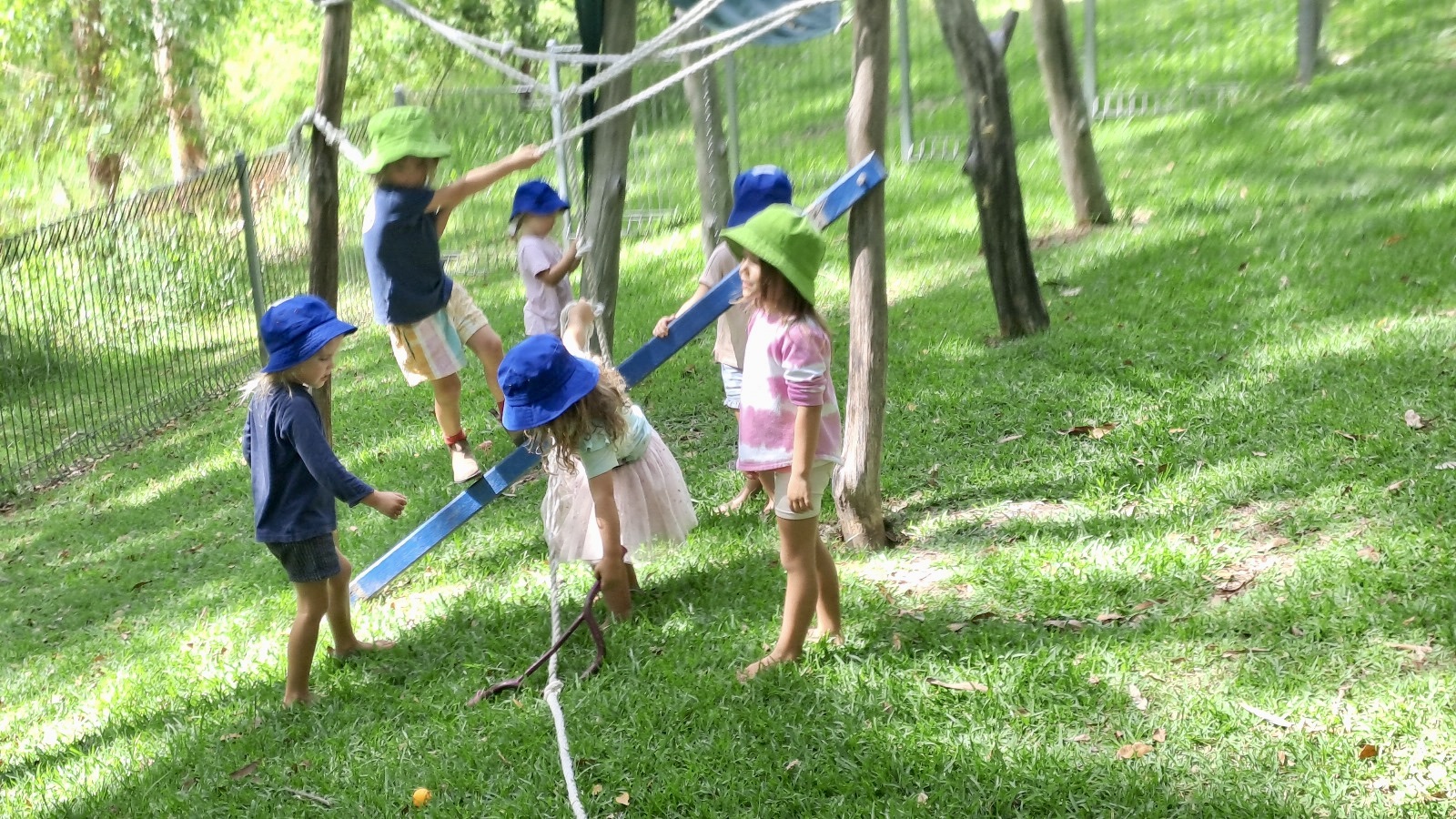
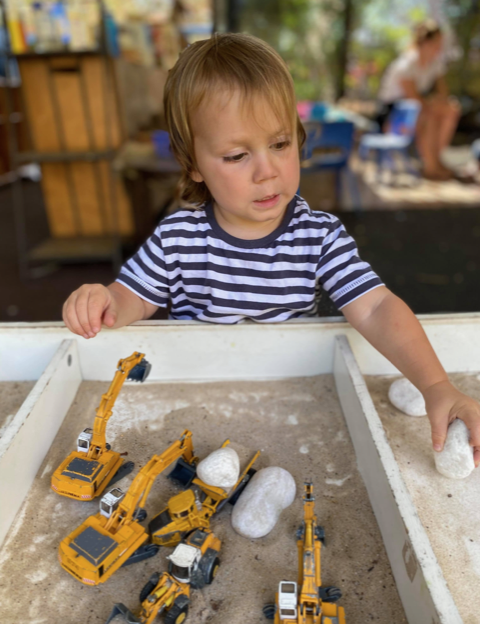
Every environment—inside, outdoors, in the bush and within small group spaces—is intentionally designed to invite expression across many languages. When a child draws spirals in ochre, constructs a towering structure of branches, tiptoes through sunlight, or narrates a dramatic play script, they are sharing parts of themselves. Through Attunement, educators listen to what is being communicated: the underlying idea, the emotion, the intention, the cultural association, the cognitive theory, or the personal narrative behind the action.
Verbal communication is nurtured through rich dialogue. Educators practise attuned listening by allowing time, holding silence, following children’s thinking, and inviting elaboration rather than directing the conversation. We model respectful language, perspective-taking, and curiosity about one another’s ideas. Children learn that their voice holds value and that communication is a shared, relational process.
The non-verbal and symbolic languages are equally valued. Through the Arts of Attunement, we notice the subtle shifts—the way a child rearranges materials, their body posture during play, the metaphors in their storytelling, or the emotions expressed through gesture. These small details offer profound insight into children’s inner worlds. Attunement helps us respond in ways that validate, extend, and support the child’s expressive intent.
Documentation—photos, transcripts, work samples, and learning stories—plays a significant role in attuned communication. It allows children to revisit their thinking, explore ideas more deeply, and communicate their intentions more clearly. For educators, documentation is an act of respect: a way to say, “I see you. I value this. Let’s explore it together.” It strengthens the loop between expression, interpretation, and further exploration.
Cultural languages—stories, songs, gestures, home languages, and family ways of knowing—are honoured as essential expressions of identity. Through attuned practice, we welcome these languages and ensure children experience continuity between home and preschool.
Ultimately, communication at Eungai is not simply about helping children speak. It is about helping children be heard, understood, and celebrated across the many expressive paths available to them. By aligning the 100 Languages with The Arts of Attunement, we ensure that every child experiences communication as a creative, relational, and deeply human process—one that strengthens identity, fosters connection, and honours the full richness of childhood.