
Relationships
Relationships & Emotional Security
At Eungai Preschool the foundation of all learning is built upon the capacity for children to form positive, secure and respectful relationships – with themselves, with others, and with their broader world.
Our philosophy positions relationships not as a ‘part’ of the curriculum, but at its very core. Children learn and grow in the context of connection; therefore emotional security and trust are intentionally cultivated across every part of the preschool day.
We begin by providing predictability – stable routines, consistent expectations and warm, reliable, adults who respond with sensitivity and attunement. Predictability does more than create smoth daily rhythms; it communicates to children that the world is safe, understandable, and responsive to them.
When children know what to expect and adults respond with warmth and integrity, a deep sense of emotional security emerges. This security is the platform from which all risk taking, exploration and curiosity can unfold.
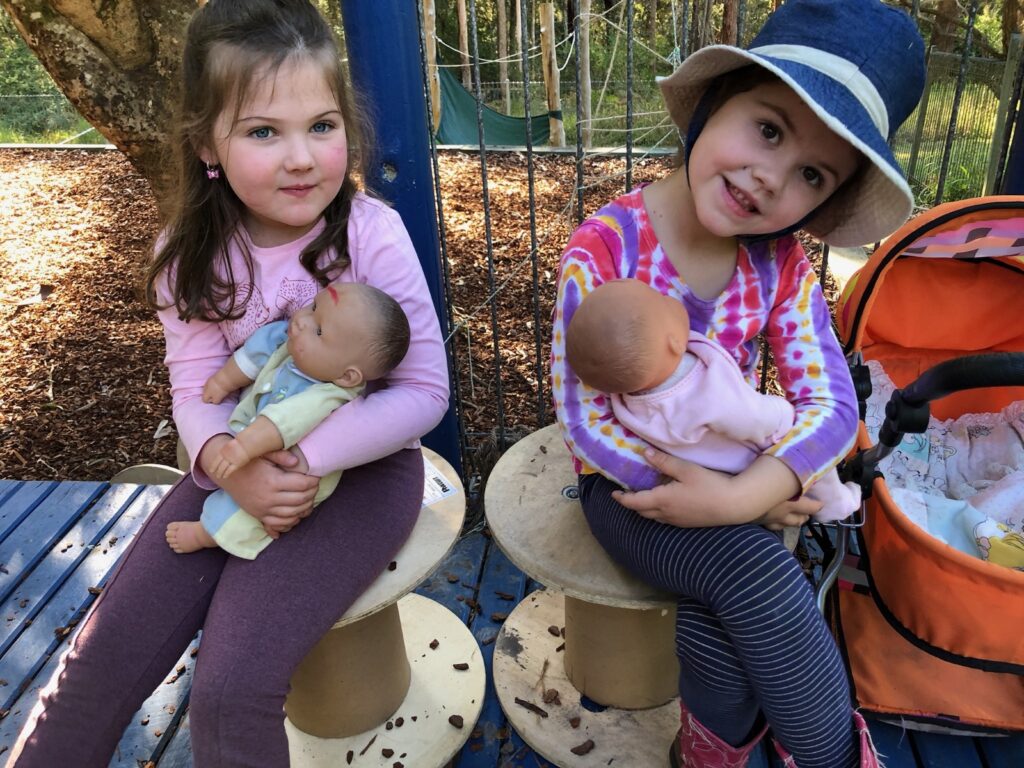
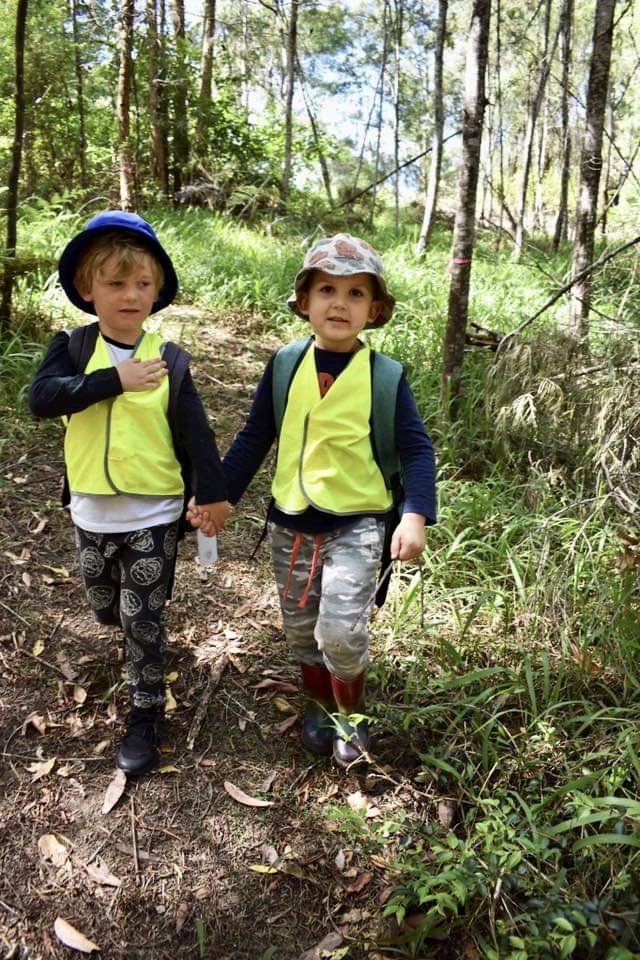
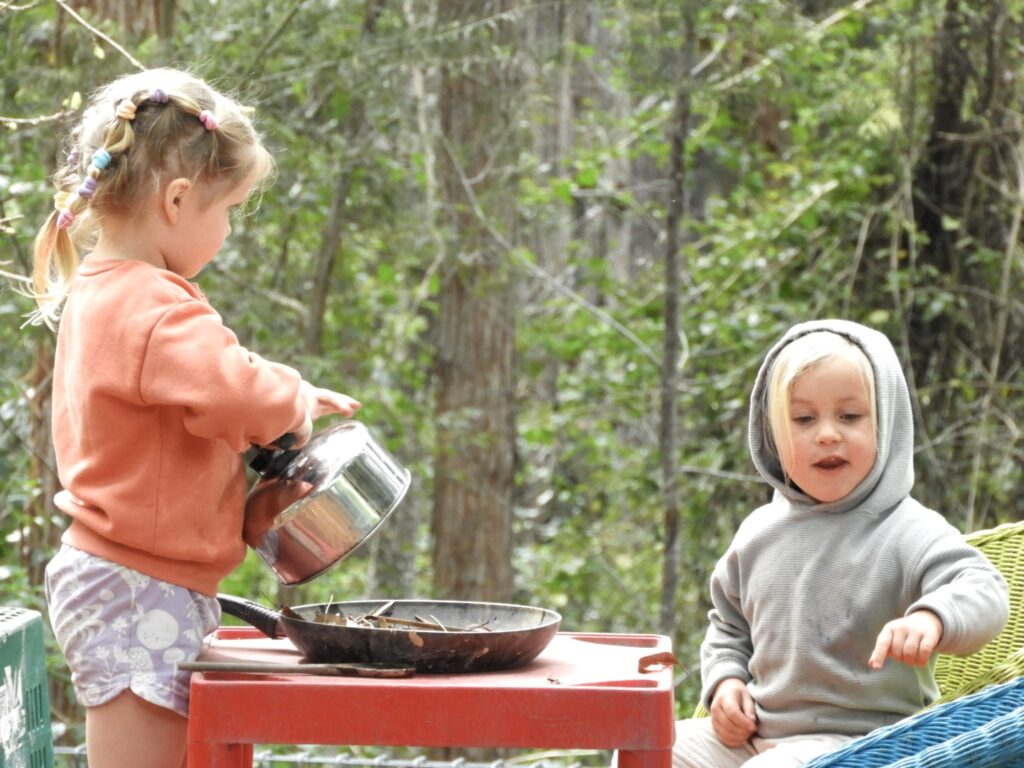
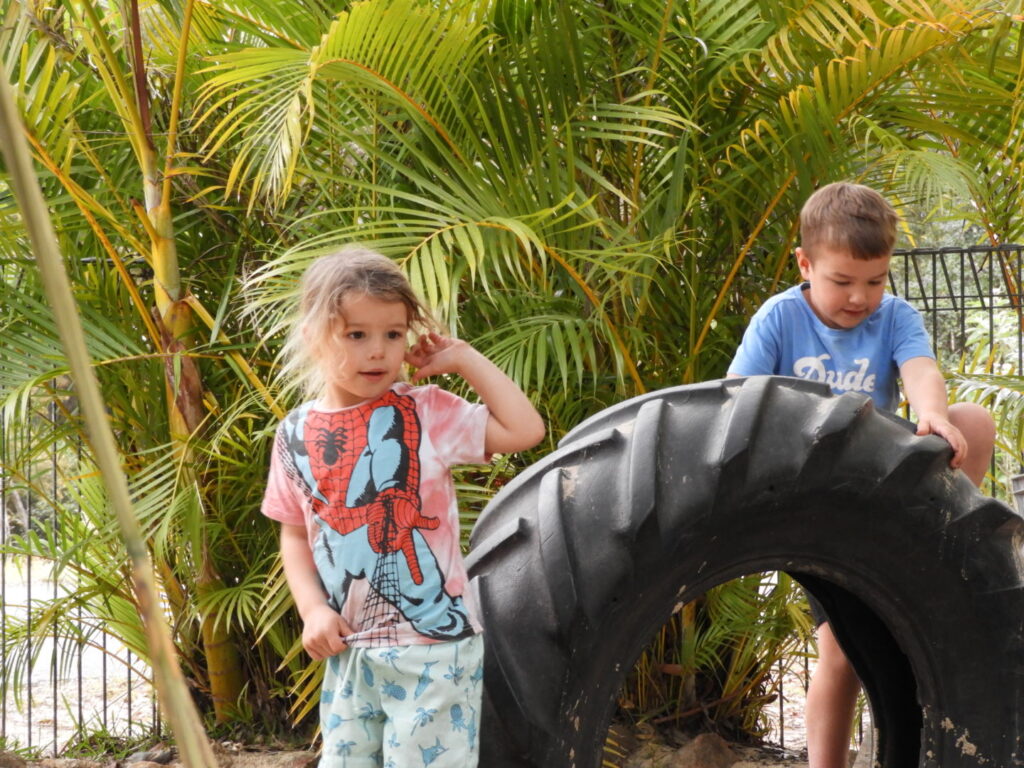
Our environments and routines are also deliberately structured to strengthen relationships. Small groups, shared rituals, time in nature and unhurried play create moments for connection and reciprocity.
Educators take the time to sit, observe, join play sensitively and follow children’s rhythms. This relational presence communicates ‘I see you. I delight in you. I am here with you.’
As children build strong attachments with educators and peers, they gain the confidence to engage in new experiences, take risks, ask for help, express their ideas and navigate challenge.
They learn to trust themselves because they have first learned to trust others. Ultimately this outcome ensures that every child leaves Eungai Preschool with the relational competencies and emotional grounding that will serve them through their school years and into adulthood.
The Guidance Approach, inspired by Louise Porter, shapes our relational pedagogy. Rather than viewing behaviour through a punitive lens we see it as communication – an expression of unmet needs, developing skills or emerging emotions.
Our educators act as co-regulators, helping children navigate strong feelings, interpret social cues and build the internal resources to resolve conflict respectfully. Through modelling, coaching, and patient presence children learn not only how to relate, but how to relate well. They come to understand empathy, perspective taking, fairness and the impact of their actions on others.
Respect and empathy guide our everyday interactions. We honour each child’s uniqueness, culture, temperament and way of being in the world. Children experience themselves as valued members of a community who are listened to, believed in, and taken seriously.
This fosters a positive self-identity – children learn ‘I am someone who matters’ which naturally extends into ‘others matter too’. In this way, prosocial behaviour develops authentically – not through reward charts or complicance, but through genuine belonging.